THE FLAGS
Swim between red and yellow
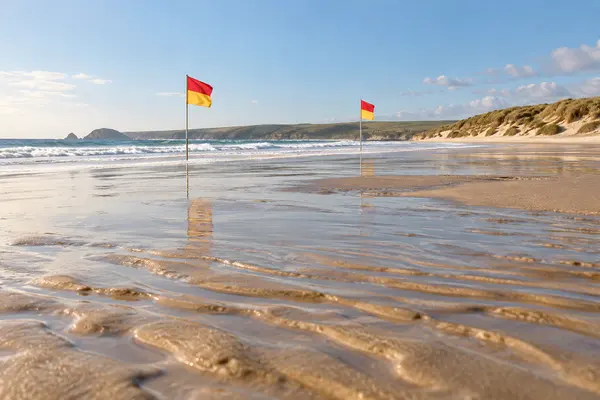
The red and yellow flags mark the lifeguarded area, which the RNLI calls the safest place to swim.
What each flag means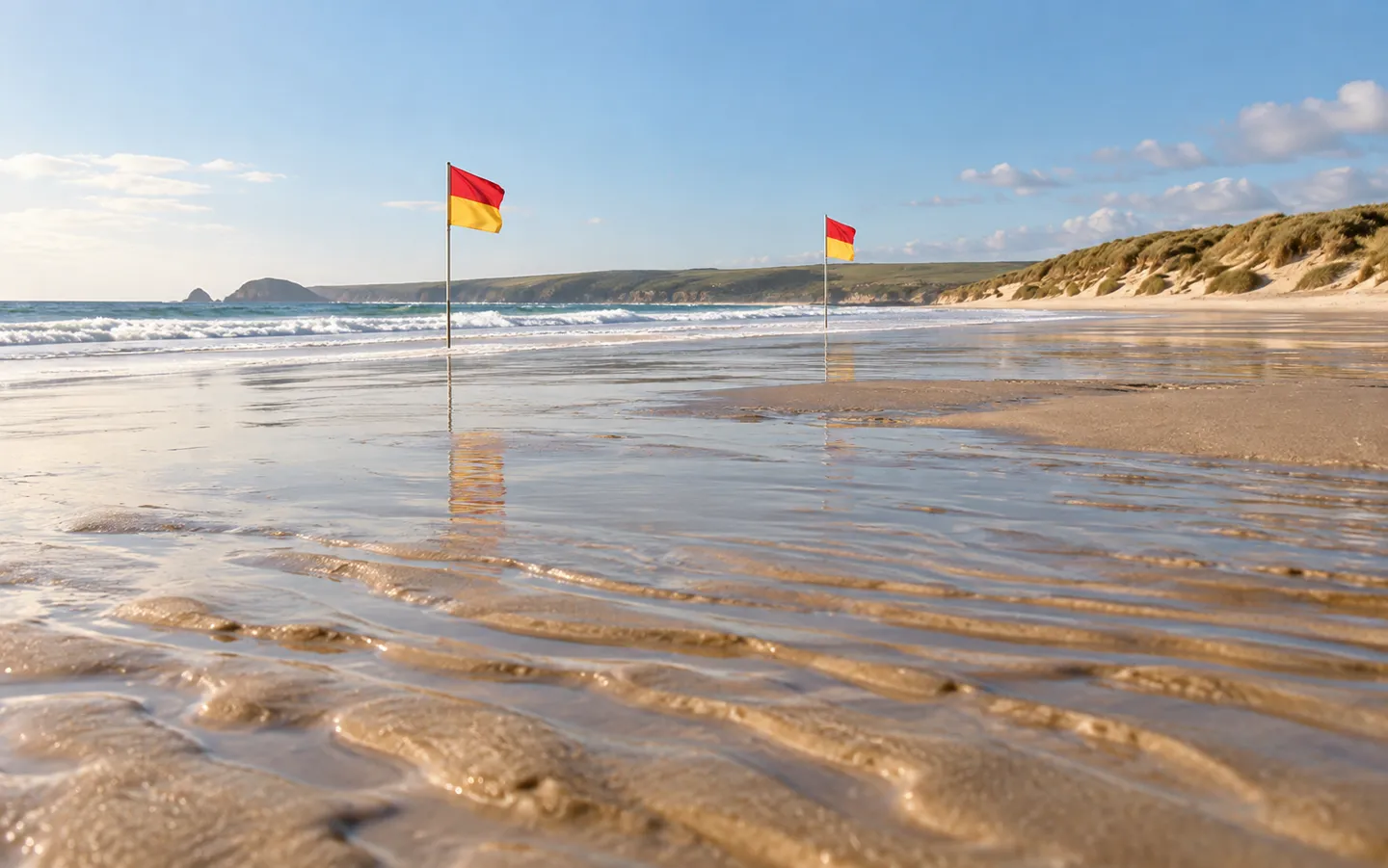
A DAY BY THE SEA, EXPLAINED
FLAGS swim between
AI-generated image, not a photograph of a real person or place.
Flags, tides, currents and sun all leave clues.
A beach changes by the hour. The flags tell you where lifeguards are watching, the tide table tells you when the sand will disappear, and a little physics explains why the sun feels stronger by the water. Here is what the lifeboat crews, forecasters and ocean scientists say, in plain English.
Plain English, with the sources linked.
THE SHORT ANSWER
Three things to check
before you lay down a towel.
THE FLAGS
The red and yellow flags mark the lifeguarded area, which the RNLI calls the safest place to swim.
What each flag meansTHE TIDE
Most coasts get two high tides a day, about 12 hours 25 minutes apart, so the timings shift daily.
How tides workTHE SUN
Dry sand can add about a fifth to your UV exposure, even when you sit in the shade.
Why it adds up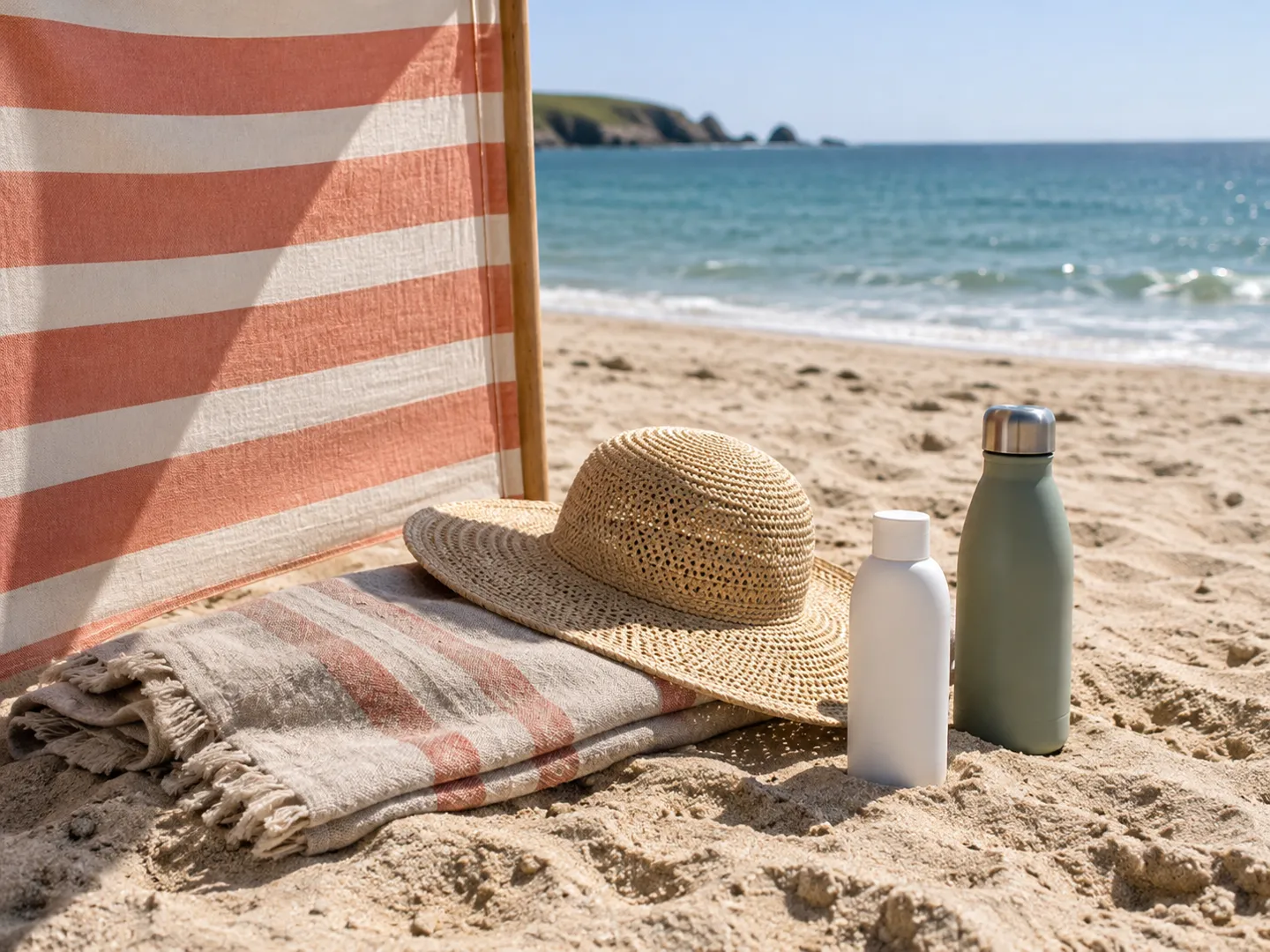
BEFORE YOU GO
The Met Office warns the tide can come in surprisingly quickly. Check the tide times before you head out.
Swim and bodyboard between them, where lifeguards are watching. Leave the chequered zone to surfers and paddlers.
If you end up in cold water, the RNLI advises fighting the urge to panic and floating or resting until your breathing settles.
If someone is in trouble, alert the lifeguards or dial 999 or 112 and ask for the coastguard, as the Met Office advises.
TWO NUMBERS WORTH KNOWING
Calm water can hide fast currents,
and cold water hits the body first.
2.4 m/s
Top speed of a rip current
The US National Weather Service says rip currents can move at up to eight feet (about 2.4 metres) per second, faster than an Olympic swimmer. Swimming against one only tires you out.
RIP CURRENTS · NOAA
60–90 s
How long the first shock lasts
The RNLI says the effects of cold water shock pass quite quickly, within 60 to 90 seconds. Floating or resting for that short time lets you regain control of your breathing.
COLD WATER SHOCK · RNLI
Both figures run against instinct. The urge is to swim hard for the shore or thrash about, and both burn the energy you need most.
A QUICK FLAG CHECK
Pick the flag you can see on the beach. The meanings come from the RNLI, the lifeboat charity.
The red flag means stay out of the water altogether. Whatever the flags show, follow what the lifeguards on the beach tell you.
SEA FACTS
NOAA says most coasts have two high tides and two low tides every day, with high tides coming 12 hours and 25 minutes apart.
A lunar day lasts 24 hours and 50 minutes, so tomorrow’s high tide will usually come later than today’s. Last week’s timings are no guide.
Australia’s Bureau of Meteorology says dry sand can increase UV exposure by 20% and water by 10%. Fresh snow, for comparison, adds around 90%.
The RNLI says around half of those who die at the coast each year never even expected to end up in the water.
NOAA links surf zone incidents, including rip currents, to about 100 deaths a year in the US, and says swimming near a lifeguard significantly reduces the loss of life.
QUICK QUESTIONS
Short answers to the questions people ask most.
They mark the lifeguarded area. The RNLI describes it as the safest place to swim and bodyboard. A black and white chequered flag marks a zone for surfboards and other craft, and a red flag means do not enter the water.
The Met Office beach advice says not to try to swim against it, because you will get exhausted, and to wade rather than swim if you can stand. If you see someone else in trouble, alert the lifeguards or call 999 or 112 and ask for the coastguard.
Most coasts have two high tides and two low tides a day. According to NOAA, high tides come 12 hours and 25 minutes apart, so each day’s tides arrive a little later than the day before. Check a tide table before you set off.
You can still be exposed. Australia’s Bureau of Meteorology says dry sand can reflect UV and increase exposure by 20%, and that even in the shade you may be exposed to UV from the sand.
A sudden gasp and loss of breath control when you enter cold water. The RNLI says its effects pass quite quickly, within 60 to 90 seconds, and advises fighting the instinct to panic and floating or resting for that short time.
Each figure on this page comes from the sources below.
A NAME WITH A SEA VIEW
doodlebeach.com is part of the DoodleSale portfolio. Check the current listing and available purchase or lease options.